Red Sunrise and Weather: What the Color Can Tell You
Red sunrise color can reveal how light meets air and clouds; pair it with cloud movement, wind, and a local forecast for a more useful weather read.
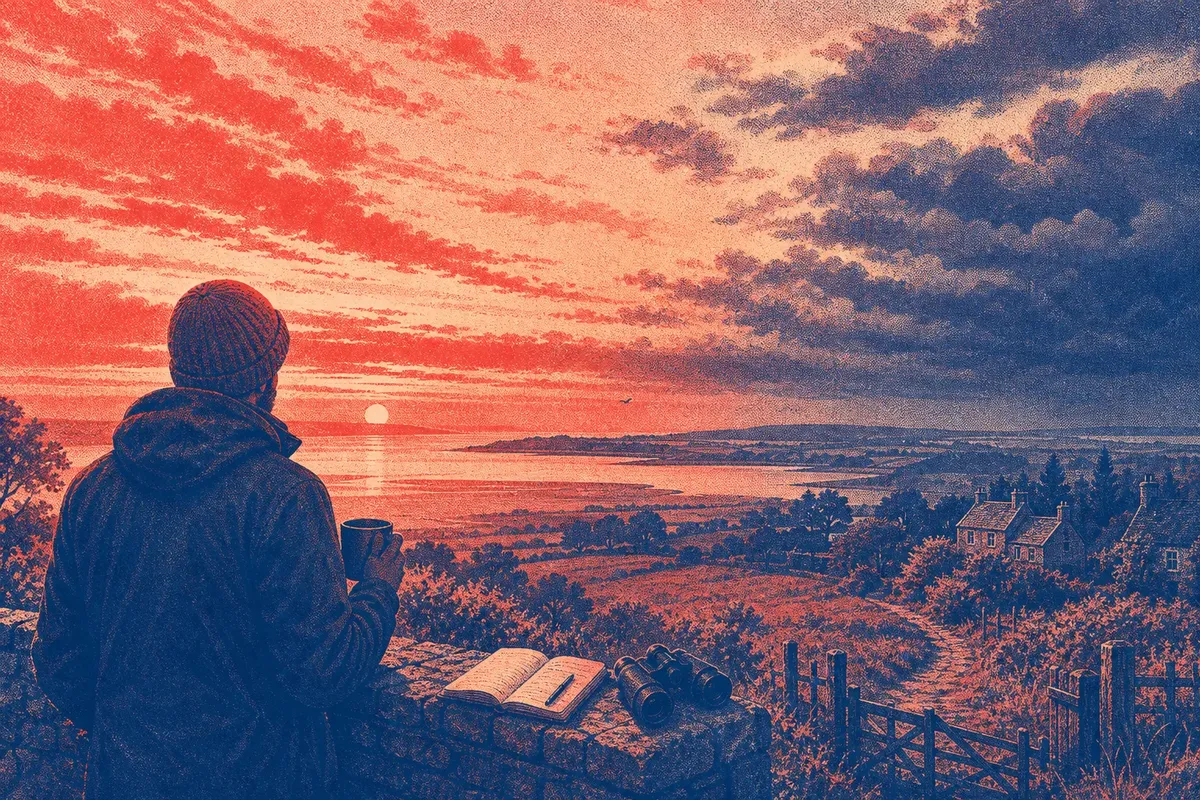
Red sunrise color can show how sunlight is being filtered by the atmosphere, but it cannot tell you by itself whether rain is coming. The familiar red-sky saying is a rough observation whose usefulness depends on local weather patterns, not a rule that applies everywhere.
Why red sunrise color appears
At sunrise, sunlight reaches you after traveling through a long, slanted stretch of atmosphere. Air molecules scatter shorter blue wavelengths more readily than longer red and orange wavelengths, so light arriving directly from the low sun can look warm.
Dust, smoke, sea salt, and other particles also scatter or absorb sunlight. Their effects depend on the particles and where they are, so haze may strengthen or soften the color without identifying the coming weather. The effect is like looking through a tinted glass jar: the view changes, but the tint does not explain what is happening outside it.
Clouds change the colors across the horizon
Thin clouds can catch low-angle sunlight and glow pink, orange, or red. A clear gap near the horizon may allow warm light to reach higher clouds, while thicker cloud cover can block it and leave the sky muted.
The same morning can look vivid from one place and subdued nearby because the cloud cover and viewing angle differ. Color alone also does not reveal whether a cloud is moving toward you or bringing rain; notice its shape and changes over time.
The red-sky saying depends on local weather patterns
The saying “red sky at morning, sailors take warning” is often explained through weather systems that move generally from west to east in some middle-latitude regions. In those settings, a red eastern sky may appear when sunlight illuminates clouds or moisture to the west before dawn. That connection is conditional: local geography, wind, season, and the path of a weather system can all change what the sky signals.
The saying is not a forecast rule, and the broad west-to-east tendency does not describe every region or every system. Distant clouds may color the horizon without bringing rain to your location, while changing weather can arrive without a red sunrise.
Combine the sky with other weather clues
Color is most useful as one observation among several. Check what is changing around you, then compare those signs with an up-to-date local forecast:
- Cloud cover: If a cloud layer is spreading or towers are growing, then watch for changing conditions; if clouds are thinning, then keep checking the forecast rather than assuming the sky is settled.
- Cloud movement: If clouds are moving across the sky or at different speeds at different heights, then note that change; if their direction is unclear, then avoid drawing a weather conclusion from movement alone.
- Wind: If wind is strengthening or shifting, then compare it with the local forecast; if you are sheltered by a building or trees, then use a more exposed observation point or rely on the forecast.
- Visibility: If distant hills, buildings, or treelines look hazier than usual, then check local air-quality information if smoke is possible; if visibility is clear, then do not treat that alone as proof that rain is unlikely.
- Forecast and alerts: If the local forecast or an alert calls for rain or hazardous conditions, then plan around that information; if it does not, then keep monitoring rather than treating sunrise color as a substitute.
- Horizon color: If red light appears with a changing cloud band, then consider the color alongside cloud movement and the forecast; if the sky is otherwise clear, then treat the glow as a visual clue, not a weather verdict.
Say you see a red eastern horizon and a gray band spreading across the western sky. If the local forecast also calls for showers, you have several clues pointing toward a wet morning, so taking an umbrella is a sensible choice; if the forecast is settled and the clouds are not changing, the red glow alone gives you little reason to expect rain.
What do people ask about red sunrise and weather?
Does a red sunrise mean rain is coming?
Not by itself. It may occur alongside clouds or moisture associated with changing weather, but the local forecast and conditions provide better context.
Why can smoke make a sunrise look redder?
Smoke particles alter how sunlight travels through the atmosphere and can make the sun or nearby sky look orange or red. Color cannot identify the source or safety of haze, so check local air-quality information if smoke is suspected.
Is a red sunset a more reliable weather sign?
A red sunset can occur when sunlight illuminates particles or clouds in the western sky, but it is not dependable as a forecast on its own. The old saying reflects broad tendencies that vary with location and weather-system movement.
Can a phone forecast replace looking at the sky?
A local forecast provides information beyond what one dawn view can show, while looking outside helps you notice conditions at your location. Using both gives a fuller picture than relying on color or an app alone.
Keep sunrise color in proportion
Red sunrise color tells you that light has passed through air containing molecules and particles, and that clouds may be catching the sun. It does not identify a particular storm, determine whether haze is hazardous, or settle what the day will bring.
For a more useful reading of red sunrise and weather, pair the color with cloud movement, wind, visibility, and a current local forecast. If those clues disagree, give the forecast and any weather alerts more weight than the horizon’s color.
Stay with the subject

Why the Sky Brightens Before the Sun Appears
Why the sky brightens before sunrise: understand how twilight light reaches you and distinguish a glowing…

Birdsong or City Hum: Two Ways to Notice an Early Soundscape
Learn to distinguish birdsong from city hum at dawn by noticing pitch, rhythm, and masking, so…